- Published on
- · July 10, 2026
Why Do Nerds Like Programming? Passion and Code
- Blog

- Henrico Piubello
- Henrico Piubello
- IT Specialist - Grupo Voitto
IT Specialist - Grupo Voitto

Nerds like programming because it rewards what defines them: curiosity, logical reasoning and the pleasure of solving problems. Every program is a puzzle that unites analysis and creation, with autonomy to build something functional from scratch. This mix of reasoning and expression explains the passion for code.
- The analytical mindset behind the nerd passion
- What does logic have to do with programming?
- Is programming creativity or only technique?
- How does the nerd community drive programming?
- The history of nerds and computing
The analytical mindset behind the nerd passion
The affinity between nerds and programming is born from an analytical mindset: the natural tendency to observe patterns, decompose problems and seek orderly solutions. Programming is the practical expression of this way of thinking, which makes the activity almost intuitive for those who already see the world in terms of systems, rules and cause-and-effect relationships.
That identity even has a date on the calendar: the 256th day of the year, picked for a reason only programmers find obvious — the story is in Programmer Day.
This fit is not just anecdotal. According to the Stack Overflow Developer Survey 2024, which heard more than 65,000 developers across 185 countries, 68% code as a hobby outside of work — a clear sign that, for much of the community, code is a source of pleasure, not only of income. The table below summarizes how typical traits of the nerd profile translate directly into programming skills.
| Nerd trait | Application in programming |
|---|---|
| Pattern-based thinking | Recognizing structures and reusing code |
| Stubborn curiosity | Debugging errors down to the root cause |
| Intense focus | Holding context in complex problems |
| Pleasure in solving enigmas | Treating bugs as challenges, not frustrations |
| Intellectual autonomy | Self-learning new languages and tools |
A warning against the stereotype is in order: you do not need to be a math genius. What the field rewards is the willingness to think methodically. At CodeCrush, we argue that this mindset can be trained — and it is worth it, as we discuss in is it worth studying programming.
What does logic have to do with programming?
Logic is the direct bridge between the nerd mind and code, because programming is, essentially, translating reasoning into precise instructions. Those who already enjoy analyzing patterns and drawing conclusions find familiar ground in programming: each algorithm is a sequence of logical decisions that the machine executes exactly as written.
Logic as a bridge to code
Early on, the nerd profile shows a propensity to identify relationships and predict consequences — the same skill that programming logic demands. Writing code requires understanding how conditions, loops and data structures combine to produce a result. This predisposition turns what many see as abstract into something concrete and pleasurable.
Problem solving: the shared essence
Problem solving is the meeting point between the nerd mindset and the practice of programming. Programming is, at its core, decomposing a large challenge into manageable parts and solving them one by one — a technique we explore in problem decomposition. Nerds tend to face bugs with tenacity, treating every obstacle as an enigma to be unraveled. This persistence, far from being suffering, is exactly the reward: the satisfaction of making something that was broken work is the engine of the lasting passion for code.
Is programming creativity or only technique?
Programming is, at the same time, technique and creativity. Contrary to the stereotype of a purely mechanical activity, writing code is closer to writing or composing: there are infinite correct solutions to the same problem, and the best one combines efficiency with clarity, elegance and personal style. Logic gives the structure; creativity decides how to fill it.
This freedom explains why so many people code for pleasure. Every project involves choices of architecture, function names and ways of organizing data — aesthetic and creative decisions, not only technical ones. The appeal is so strong that, according to the Stack Overflow Developer Survey 2024, 82% of developers learned to program using online resources, versus 49% who learned in school. That is: most sought the knowledge on their own, driven by the curiosity to create.
For the nerd profile, code becomes a blank canvas. Building a game, automating a boring task or bringing a crazy idea to life are creative acts that unite logic and imagination. It is this fusion between the rigor of the machine and the freedom of authorship that keeps programmers immersed for hours, treating work as a form of expression.
How does the nerd community drive programming?
The community turns programming from a solitary hobby into a collective effort. Forums, social networks and open source projects connect enthusiasts who exchange knowledge, review each other's work and build solutions together. This culture of sharing accelerates learning and broadens the reach of each individual developer.
Collaboration and open source
The nerd culture, marked by a shared passion for technology, scaled up with the internet. Open source became a space where beginners read real code from experienced professionals and contribute without asking permission. Versioning platforms with Git let thousands of people collaborate on the same project without stepping on each other's work, making collaboration the norm, not the exception.
Collective projects and the power of GitHub
By joining collective projects, developers combine diverse skills to solve complex challenges. Platforms like GitHub and GitLab work as showcases for this talent — and the scale is impressive. According to the GitHub Octoverse report, the platform already gathers more than 180 million developers, with a new profile created, on average, every second. Being part of this network is part of the fun, and building a strong profile makes a difference in your career, as we show in the guide to building a standout GitHub.
The history of nerds and computing
The relationship between nerds and programming goes back to the early days of computing. Pioneers like Alan Turing and Ada Lovelace saw in machines not only calculation tools, but a field of intellectual exploration — the same stubborn curiosity that defines nerd culture to this day. The history of software is, to a large extent, the history of people fascinated by unraveling complex systems.
From the first vacuum tubes to personal computers, every advance was driven by enthusiasts who programmed out of passion before there was a market for it. The hobbyist clubs of the 1970s, the forums of the 2000s and today's open source communities form a continuous lineage. What changed was the scale: a once-niche passion now drives a global industry and connects millions of people around the world.
Conclusion
The passion of nerds for programming is no accident or stereotype: it is born from a rare fit between how these people think and what the activity offers — logic, problem solving, creation and community all in one. If you identify with the desire to decompose problems and build solutions, the good news is that this mindset can be trained. Start with a project that sparks your curiosity, publish it on GitHub and let the very satisfaction of making it work pull the rest.
Recommended for this topic
Picked by the editors — only what we would use.
## faq
Frequently asked questions
Why do nerds like programming so much?
Because programming rewards exactly the traits that define the nerd profile: curiosity, logical reasoning and the pleasure of solving problems. Every program is a puzzle that unites analysis and creation, offering autonomy to build something functional from scratch and watch the idea come to life on the screen.
Do I need to be a nerd or a math genius to program?
No. Programming demands logic and persistence, not mathematical genius. Most developers are self-taught: according to Stack Overflow 2024, 82% learned with online resources. Anyone willing to decompose problems and practice can develop the analytical mindset the field asks for.
Is programming a creative activity or only logic?
It is both. Logic gives the structure, but choosing the architecture, naming functions and solving a problem elegantly is pure creation. Programming is like writing or composing: there are infinite correct solutions, and the best combines efficiency with clarity and personal style.
How does the community help those learning to program?
The community accelerates learning through open source, forums and peer review. Platforms like GitHub and Stack Overflow let you read real code, ask questions and contribute to projects. This constant exchange turns solitary study into a collaborative and much faster journey.
What does nerd culture have to do with the history of computing?
Computing was born from the stubborn curiosity of pioneers like Alan Turing and Ada Lovelace, who saw in machines a field of intellectual exploration. That same passion for unraveling complex systems — the core of nerd culture — shaped the entire evolution of software to this day.
Topics in this article
## continue lendo
Artigos relacionados


Keep browsing
Previous article
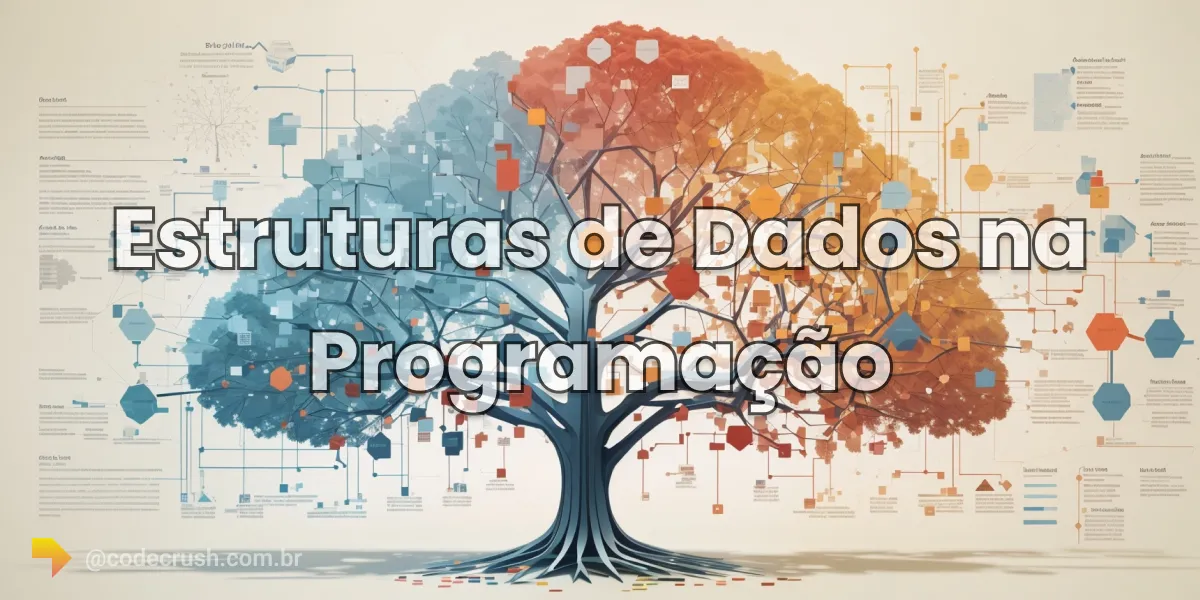
Data Structures: Arrays, Stacks, Queues, Trees, and Hash
Data structures organize information in memory: arrays and lists hold collections, stacks and queues control order, and hash tables speed up lookups.
Read moreNext article

Golang: what it is, what it is for, and how to get started
Go (Golang) is a compiled open-source language created at Google, with native concurrency via goroutines, used in APIs, cloud, and microservices.
Read moreAbout the author