- Published on
- · July 10, 2026
10 Sites with Programming Challenges to Practice
- Blog

- Henrico Piubello
- Henrico Piubello
- IT Specialist - Grupo Voitto
IT Specialist - Grupo Voitto

The best sites with programming challenges are HackerRank, Codeforces, LeetCode, Project Euler, Codewars, Exercism, TopCoder, CodeChef, SPOJ, and AtCoder. Each platform trains algorithms, data structures, and logic, from beginner level to technical interview preparation and competitions.
- What are programming challenge sites?
- Which programming challenge site to choose?
- HackerRank: the platform to start
- Codeforces: algorithm and math competitions
- LeetCode: why does it dominate technical interviews?
- Project Euler: applied math to programming
- Codewars: what are the kyu levels?
- Exercism: how does mentor feedback work?
- TopCoder: competitions with cash prizes
- CodeChef: monthly challenges and in-depth training
- SPOJ: what is the Sphere Online Judge for?
- AtCoder: how to train for official competitions?
What are programming challenge sites?
Programming challenge sites are online platforms that gather code problems to solve, with automatic grading and performance rankings. They serve to practice algorithms, data structures, and programming logic progressively, turning theory into constant and measurable practice.
Unlike a linear course, these platforms put you to write real solutions and have them evaluated by an online judge — a system that runs your code against dozens of test cases. This exposes edge errors, complexity inefficiencies, and reasoning flaws that passive reading never reveals.
There are three major uses: preparing for technical interviews, competing in sport programming, and simply mastering a new language. Here at CodeCrush we selected the 10 most relevant platforms for each of these paths, focusing on what actually helps you evolve in 2026.
Which programming challenge site to choose?
The choice depends on your main goal: interview, competition, or language practice. The table below summarizes each platform's focus so you can decide quickly before diving into the details of each one.
| Platform | Main focus | Ideal for |
|---|---|---|
| HackerRank | Broad, guided practice | Beginners and certifications |
| LeetCode | Algorithms and interviews | Big tech jobs |
| Codeforces | Competitions and math | Competitive programming |
| Codewars | Katas per language | Learning new languages |
| Exercism | Mentor feedback | Collaborative learning |
| SPOJ | Volume of problems | Algorithm practice |
| AtCoder | Timed contests | Competitive training |
If you are still at the beginning, it is worth reinforcing first the fundamentals of data structures and getting to know the most used programming languages, since almost all challenges require a good base in these two pillars.
HackerRank: the platform to start
HackerRank is the friendliest gateway for those who want to start solving challenges. The platform organizes problems into tracks — algorithms, data structures, math, SQL, AI (Artificial Intelligence), and web development — and increases the difficulty gradually, which avoids the frustration common among beginners.
According to the company itself, HackerRank gathers a community of more than 26 million developers, making it one of the largest technical practice and assessment platforms in the world. This reach also explains why so many companies use HackerRank in their hiring processes.
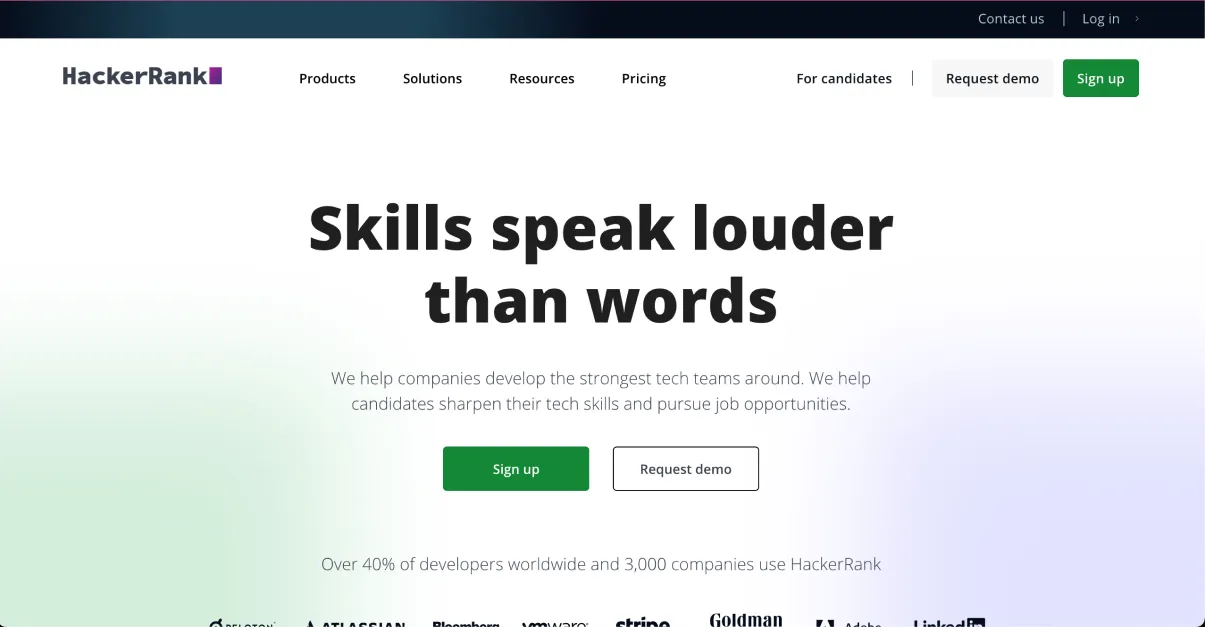
Besides the challenges, the platform offers free certifications and detailed tutorials that explain fundamental concepts before each category. For those looking for a structured, market-recognized track, HackerRank balances guided learning and real practice like few alternatives.
Codeforces: algorithm and math competitions
Codeforces is the world's leading competitive programming arena, with an intense focus on algorithms and math. The platform runs regular rounds — high-quality timed competitions — and maintains a rating system that ranks participants by performance, encouraging continuous evolution.
The community reach is enormous: on its 15th anniversary, Codeforces already counted 1,692,402 users with at least one submission, with an average of more than 11,000 competitors per round. This volume guarantees competitive global rankings and rich discussions after each contest.
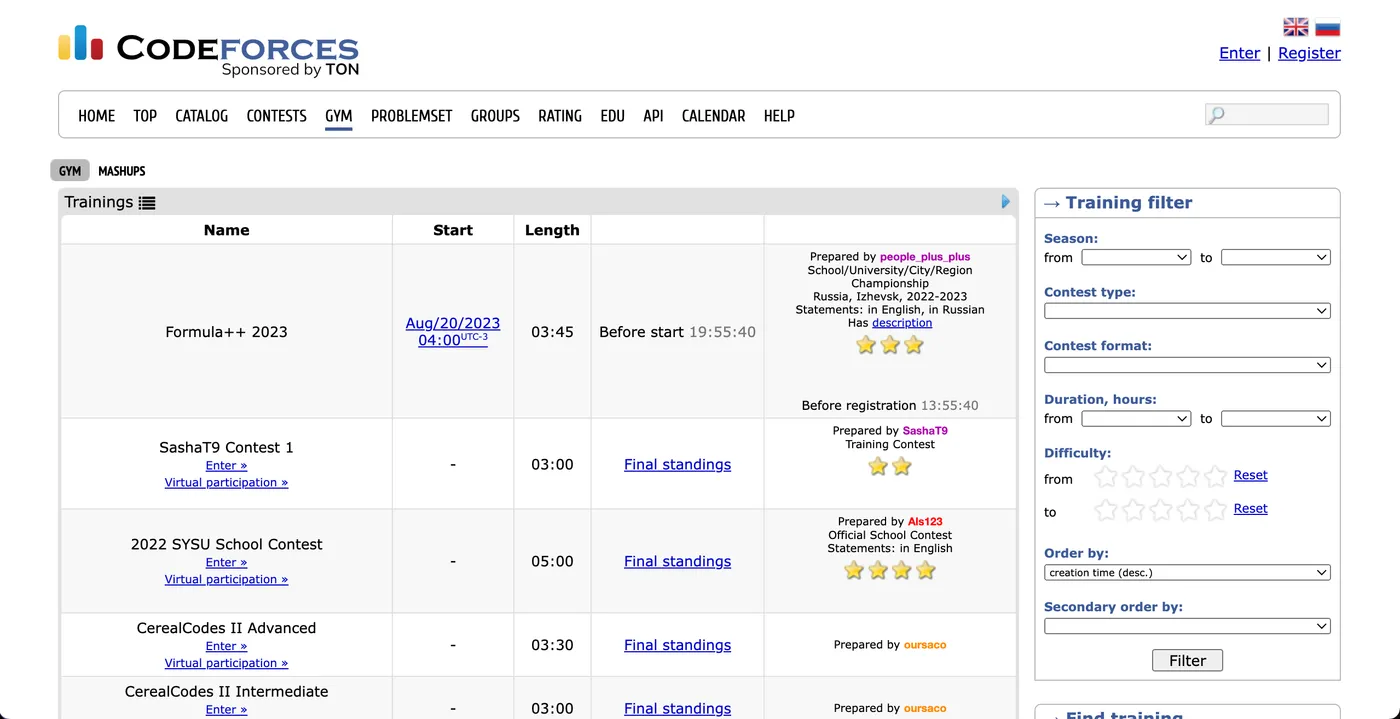
The problems are categorized by difficulty, so both beginners consolidating concepts and veterans seeking advanced challenges find suitable material. The editorials published after each round reveal alternative approaches and help internalize solution patterns — one of the platform's biggest differentials.
LeetCode: why does it dominate technical interviews?
LeetCode dominates technical interviews because many tech companies incorporate its problems directly into recruiting processes. Solving its challenges prepares you for the formats, topics, and complexity levels that appear in real algorithm and data structure interviews.
The catalog is vast and up to date: according to Wikipedia, LeetCode offered 3,816 problems in January 2026 — 922 easy, 1,922 medium, and 902 hard. This distribution lets you build a track from basic to advanced without leaving the platform.

Every problem brings community discussions, where programmers share commented solutions and strategies. For those aiming at jobs in large tech companies, combining LeetCode with good career preparation — such as understanding the junior, mid-level, and senior dev levels — is one of the most efficient routes.
Project Euler: applied math to programming
Project Euler unites math and programming in problems that can only be solved with analytical reasoning and efficient code. Each challenge is a mathematical question — from number theory to combinatorics — that requires creating an algorithm capable of calculating the answer in viable time.
The differential lies in the emphasis on efficiency: many problems have naive solutions that would never finish, forcing you to discover the mathematical property that reduces complexity. This training sharpens the ability to identify patterns and optimize code, a valuable skill in any area of computing.
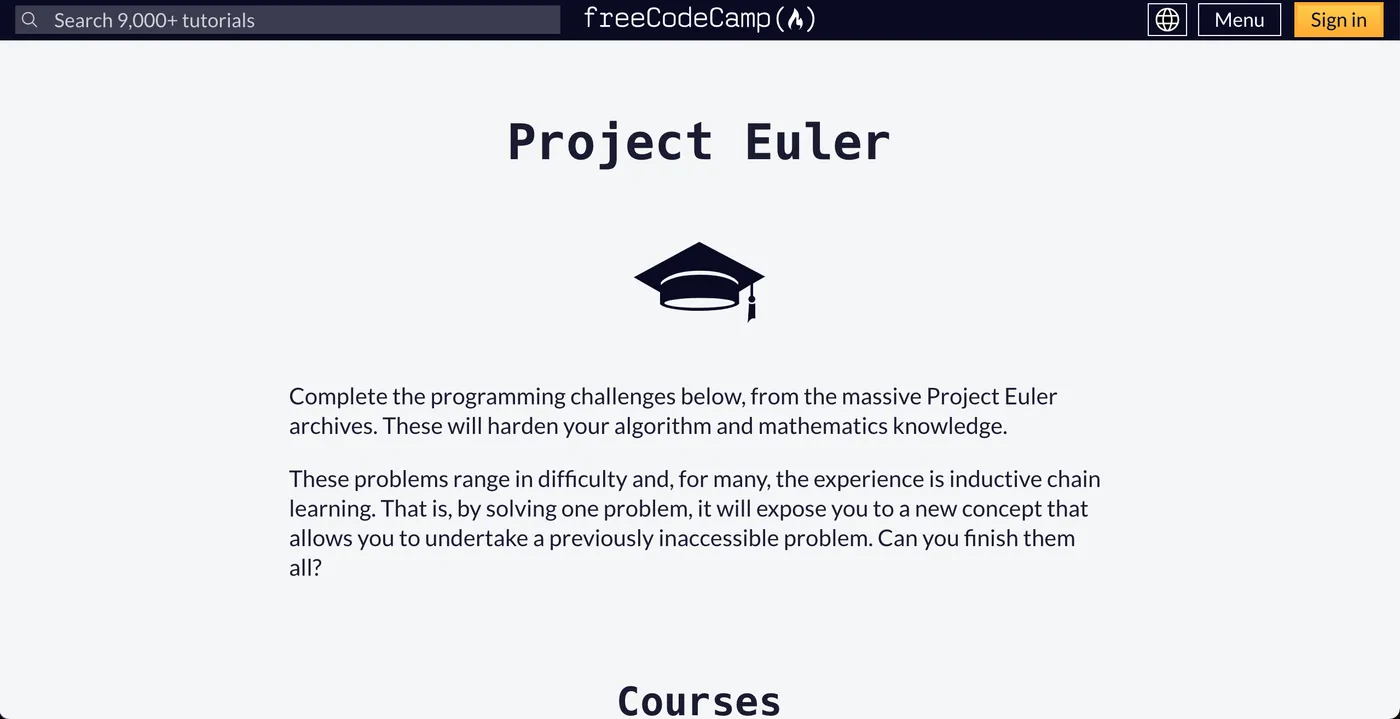
The Project Euler problems grow in difficulty gradually, allowing you to start with accessible questions and advance at your own pace. Forums unlocked after solving gather a global community of enthusiasts who discuss elegant mathematical approaches.
Codewars: what are the kyu levels?
On Codewars, kyu are the difficulty levels of the challenges, inherited from martial arts: the lower the kyu number, the harder the problem. Beginners start at high kyu (like 8 kyu) and progress toward lower ones, measuring evolution in a clear and motivating way.
The platform calls its challenges "katas" and covers the most popular languages, encouraging you to solve the same problem in different programming languages. This broadens your repertoire and exposes specific features of each language that isolated practice would rarely reveal.
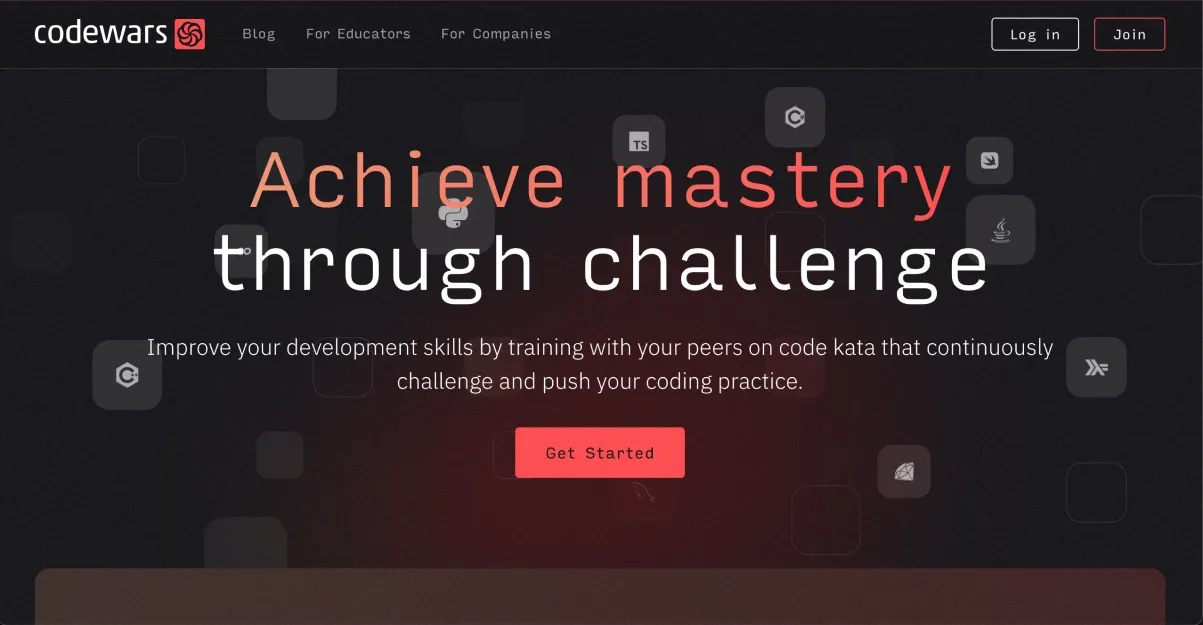
Codewars' great differential is the collaborative component: after solving a kata, you see other programmers' solutions, often more elegant and concise than yours. This contrast teaches you to write clean and efficient code in practice.
Exercism: how does mentor feedback work?
On Exercism, feedback works through mentorship: you submit a solution to an exercise and receive detailed comments from experienced volunteer mentors, who point out areas for improvement and suggest best practices. It is this human layer that separates the platform from purely automatic judges.
The track is organized by language, with dozens of languages available and exercises that evolve in concepts. Since the focus is learning a language deeply, Exercism prioritizes solution quality and mastery of specific languages over competitive ranking.
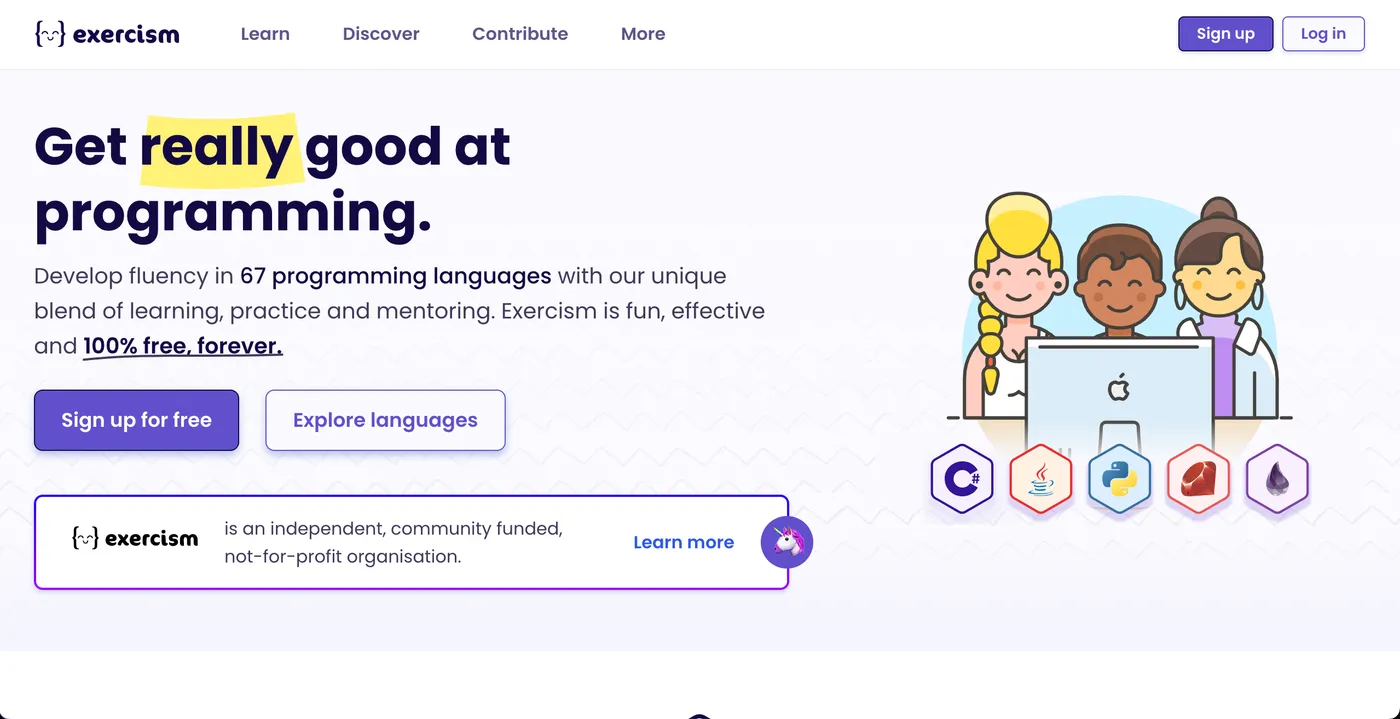
Besides practicing, you can contribute by creating and reviewing exercises, taking part in the platform's own open source projects. For those who value feedback-driven learning and a welcoming community, Exercism is one of the most complete and fully free options.
TopCoder: competitions with cash prizes
TopCoder is one of the pioneering competitive programming platforms and stands out for offering cash prizes in its competitions. The challenges range from advanced algorithms to complete software development projects, organized into "tracks" you choose according to your area of interest.
The competitions test your ability to program effective solutions under time pressure, simulating real fast-resolution scenarios. Besides technical growth, TopCoder adds a tangible incentive: good performances yield financial rewards and visibility with companies looking for talent.
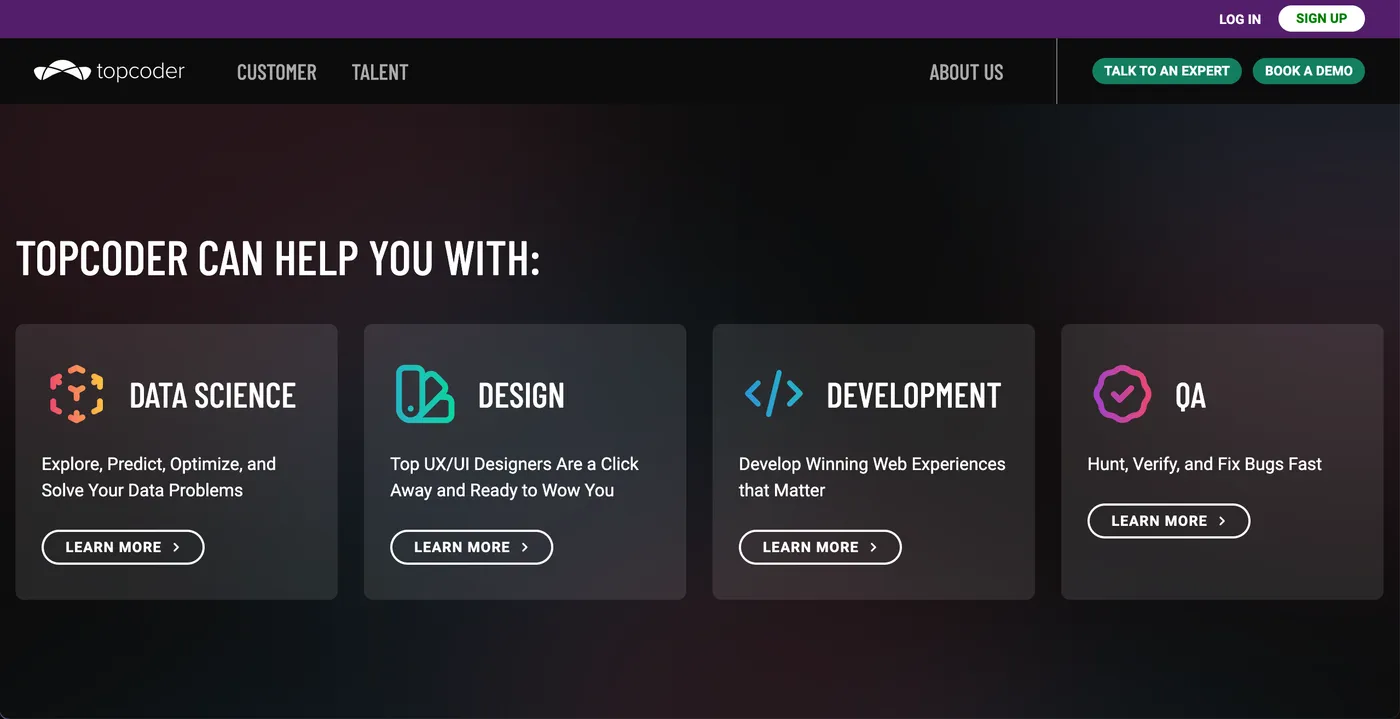
The platform maintains forums and discussions where participants share solutions and get constructive feedback. For programmers driven by competitiveness and who like to compete for recognition and prizes, TopCoder offers a mature arena consolidated for more than two decades.
CodeChef: monthly challenges and in-depth training
CodeChef combines monthly competitions with a detailed training environment in algorithms and data structures. Its recurring contests gather programmers from around the world and are divided by difficulty levels, ensuring suitable challenges for both beginners and veterans.
The great value lies in the learning material: besides the problems, CodeChef publishes tutorials, discussions, and editorials that unravel the solutions step by step. This teaching-oriented approach helps you understand the concepts behind each problem, not just get it right.
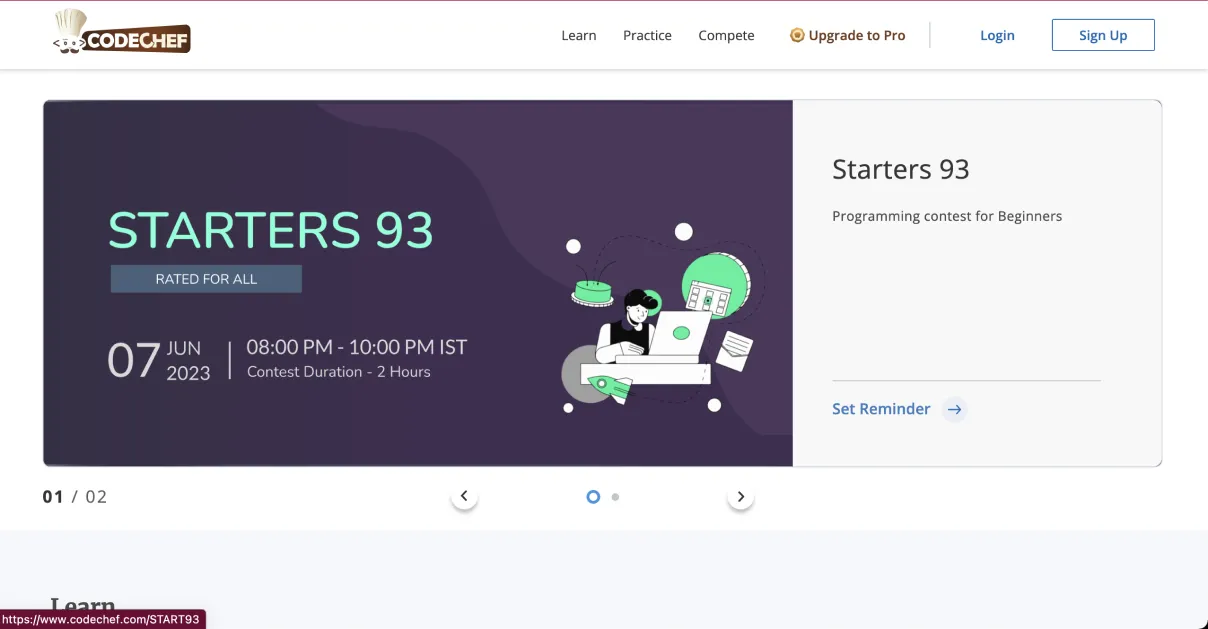
By alternating between competitions, feedback from other solutions, and study tracks, you maintain a constant cycle of technical development. CodeChef is recommended for those who want to evolve in a disciplined way and prepare for real challenges in professional environments.
SPOJ: what is the Sphere Online Judge for?
SPOJ (Sphere Online Judge) serves to practice algorithms with one of the world's largest problem catalogs, covering everything from introductory questions to advanced challenges. It is a classic online judge, aimed at those who want volume and variety of problems to solve in many languages.
The SPOJ catalog spans math, data structures, implementation, and advanced algorithms, which exposes you to very different domains. Each submitted solution is evaluated by performance scores, encouraging not only correct resolution but also code efficiency optimization.
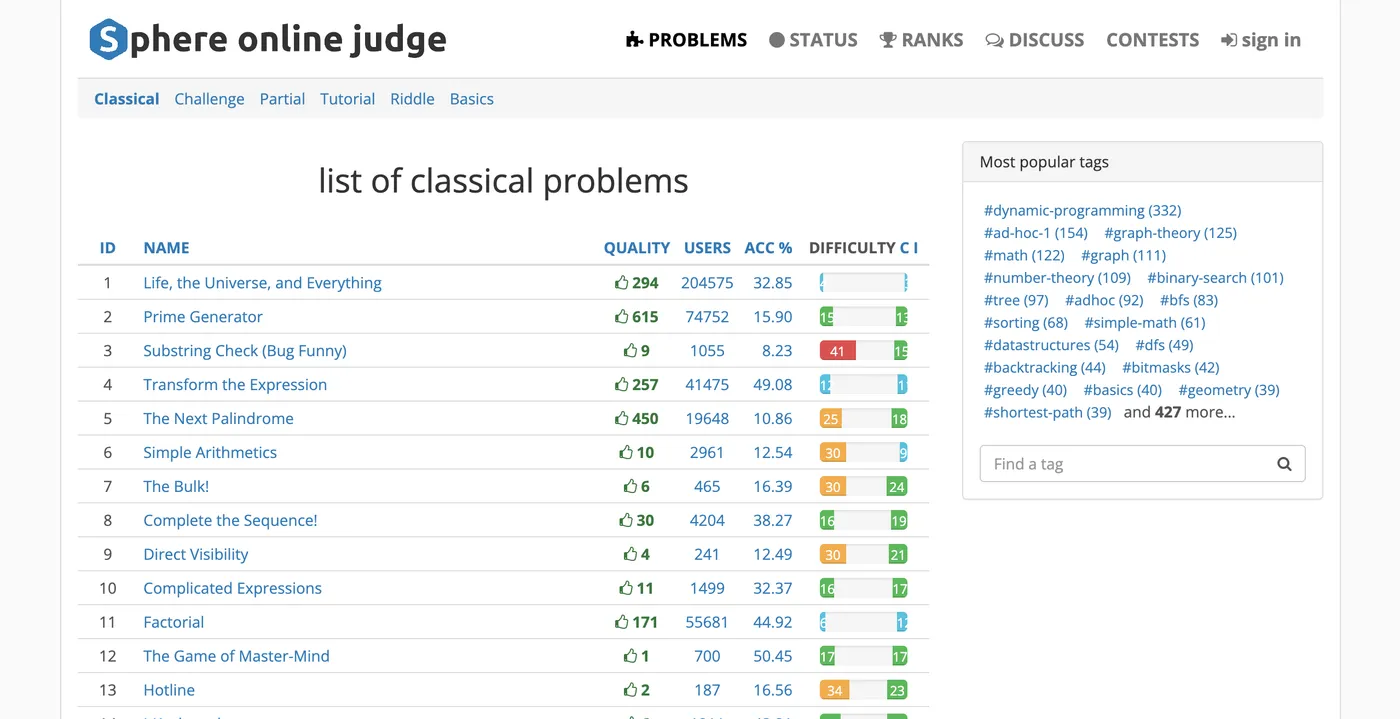
Submitting solutions with immediate feedback is the heart of the experience: you test your algorithms, learn from mistakes, and refine approaches. For programmers who want quantity and freedom of exploration, SPOJ remains a reliable reference.
AtCoder: how to train for official competitions?
To train for official competitions, AtCoder is the ideal choice, since its regular contests reproduce the format and difficulty of real-life programming disputes. The Japanese platform is recognized for the quality of the problems and the clarity of the statements, even in translated versions.
The AtCoder challenges are organized by levels, allowing you to progress gradually and comfortably. Many problems are reused from official competitions, so practicing on the platform works as direct preparation for formal tournaments, strengthening both skill and confidence under pressure.
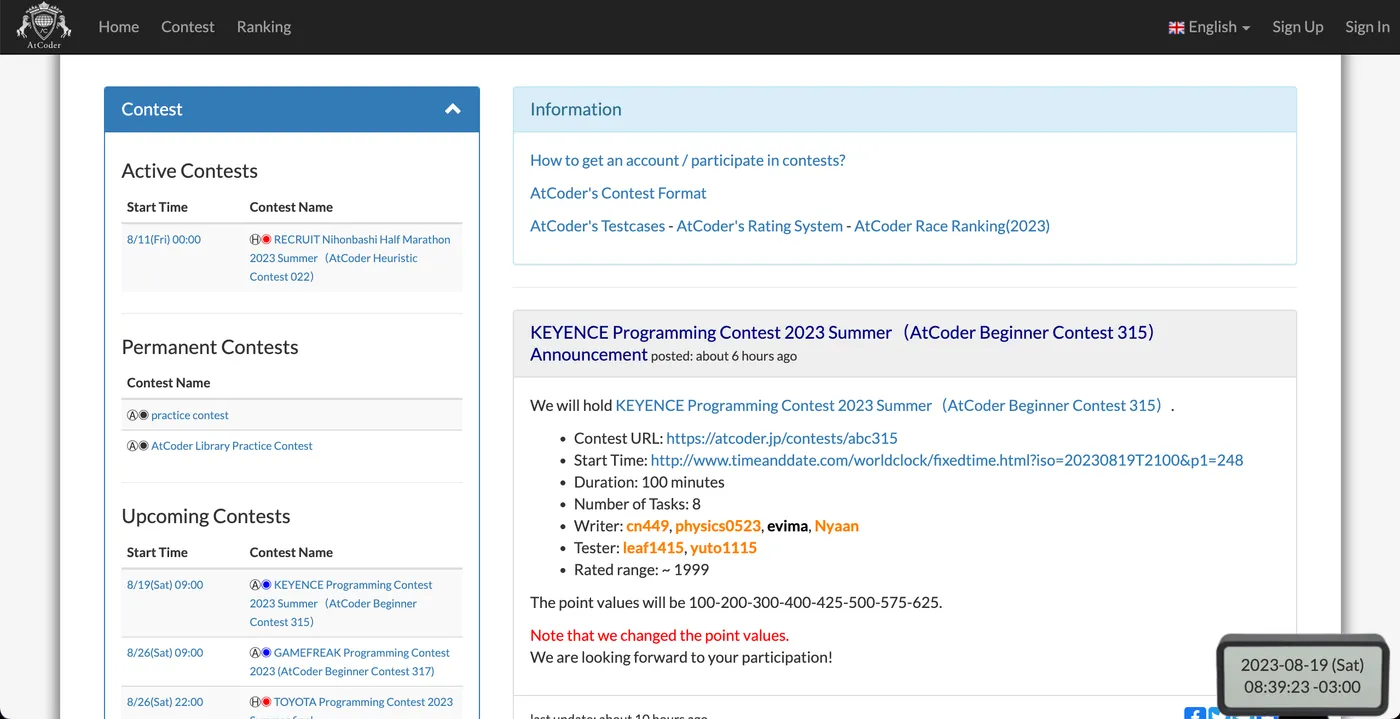
The active community complements the experience with editorials and discussions that explore varied approaches. If your goal is to evolve in competitive programming with a welcoming environment and high-quality problems, AtCoder is a fertile ground of opportunities.
Conclusion
There is no definitive challenge site — there is the right one for your goal right now. If you aim at a big tech job, start with LeetCode; if you want to climb the ranking in competitive programming, focus on Codeforces and AtCoder; if you are learning a language, Codewars and Exercism give the feedback that accelerates the curve. The most common mistake is jumping from platform to platform without consistency. Choose one, solve problems almost every day, and let your own progress — visible on the ranking or in mentor feedback — pull you to the next level.
Recommended for this topic
Picked by the editors — only what we would use.
Bookcenter RJ
Kit Upgrade INTEL I5 4570 + Placa Intel H81 + Memória 8 GB+ Cooler
Huion Official Store
Mesa Digitalizadora android, Huion, H430P, Tablets de Design Gráfico, Black
A Casa dos Importados
Hub Usb 2.0 c/7 Portas Pen Drive Teclado 480mbps Hd
## faq
Frequently asked questions
What is the best site to practice programming in 2026?
There is no single best: it depends on the goal. For technical interviews, LeetCode is the standard. For competitive programming, Codeforces and AtCoder. To learn a new language with feedback, Codewars and Exercism. HackerRank is the most versatile for those starting out.
LeetCode or HackerRank: which to choose?
Choose LeetCode if the focus is passing big tech interviews, since many companies use its problems in recruiting. Prefer HackerRank if you want a broader guided track, with tutorials, certifications, and categories ranging from algorithms to web development.
Are programming challenge sites free?
Most offer a robust free plan. HackerRank, Codeforces, Codewars, Exercism, SPOJ, and AtCoder are essentially free. LeetCode and CodeChef have paid premium versions with exclusive problems and interview features, but the free content is already enough to evolve a lot.
Is it worth using challenge sites to get a job?
Yes. Solving challenges reinforces algorithms, data structures, and logic — exactly what shows up in technical interviews. In addition, platforms like HackerRank and LeetCode are used directly by recruiters, and an active profile works as practical proof of your coding skills.
Topics in this article
## continue lendo
Artigos relacionados


Keep browsing
Previous article

Programming Logic: What It Is, Concepts, and How to Learn
Programming logic is the foundation for creating algorithms: understand variables, conditionals, loops, and data structures with practical examples in Python.
Read moreNext article

Developer resume: how to create one that impresses
An effective developer resume is 1–2 pages long, tailors skills to the job, proves results with numbers, and includes links to GitHub and LinkedIn.
Read moreAbout the author