- Published on
- · July 10, 2026
Artificial Intelligence Applications: Examples and Real Uses
- Blog

- Henrico Piubello
- Henrico Piubello
- IT Specialist - Grupo Voitto
IT Specialist - Grupo Voitto
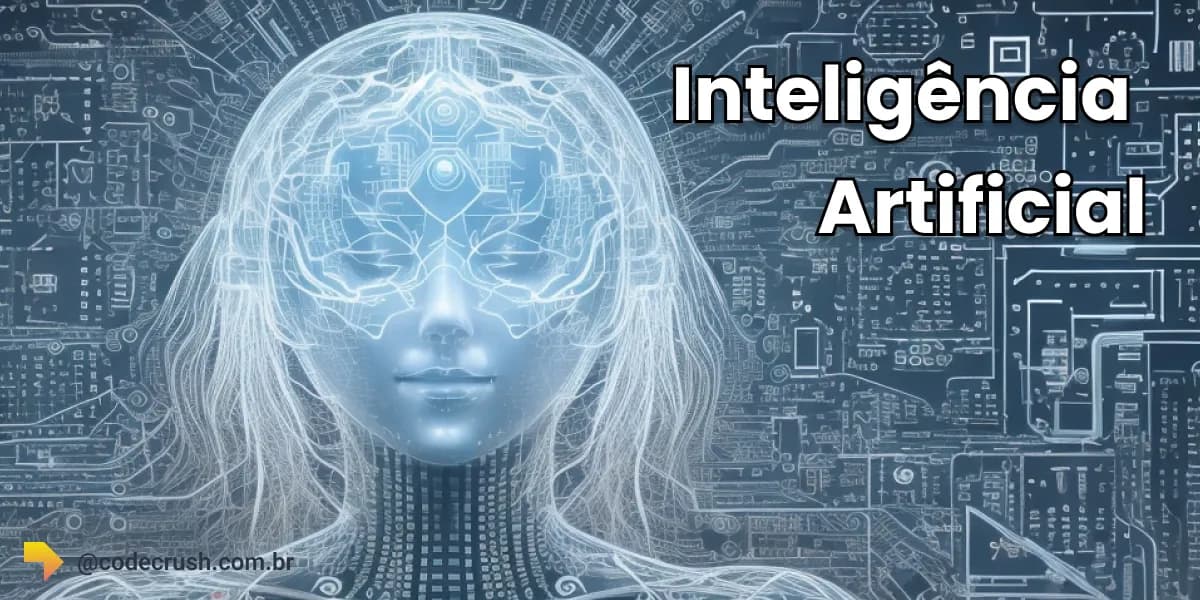
The most relevant applications of AI (Artificial Intelligence) today include medical diagnosis, digital security, smart routing, industrial production, customer service, and marketing. These are systems that learn from data to recognize images, understand natural language, and predict human behavior.
- What is artificial intelligence?
- How does artificial intelligence work?
- What are the main applications of artificial intelligence?
- How is artificial intelligence applied in everyday life?
- How to apply artificial intelligence at work?
- How do models like ChatGPT work?
- What are the risks of artificial intelligence?
- Where to start studying artificial intelligence?
What is artificial intelligence?
Artificial Intelligence is an area of computer science that develops algorithms and systems capable of performing tasks that usually require human intelligence, such as learning, decision-making, speech and vision recognition, and natural language processing, used to automate and optimize processes in virtually every sector.
AI systems are designed to analyze large amounts of data and learn from it, which means they can adapt and improve over time. Corporate adoption has accelerated: according to the McKinsey State of AI report (2025), 88% of organizations already use AI in at least one business function, up from 78% the previous year.
If the difference between the terms still confuses you, check out this comparison between machine learning and artificial intelligence.
How does artificial intelligence work?
Artificial intelligence works through machine learning algorithms, which allow the system to learn from available data and adapt to new information. There are three main types of learning: supervised, unsupervised, and reinforcement.
In supervised learning, the system is trained with a labeled dataset and then uses that knowledge to classify new data. In unsupervised learning, the system looks for patterns in the data without prior labels. In reinforcement learning, the system learns by trial and error, receiving positive or negative feedback on its actions.
Machine learning
Machine learning is the technique that allows AI systems to learn from data. The algorithms analyze large volumes of information and use these patterns to make predictions or decisions.
Neural networks
Neural networks are mathematical models designed to mimic the workings of the human brain. These models learn from examples and make predictions based on that learning — they are the foundation of today's language models.
Natural language processing
NLP (Natural Language Processing) is the technique that allows AI systems to understand human language, through algorithms that analyze the meaning of words and sentences.
What are the main applications of artificial intelligence?
The main applications of artificial intelligence today are concentrated in seven areas: medicine, digital security, routing, document verification, industrial production, customer service, and digital marketing.
- Medicine — more accurate diagnoses and hospital risk management.
- Digital security — intrusion detection and suspicious activity monitoring.
- Routing apps — traffic optimization and travel prediction.
- Document verification — authentication with OCR and biometrics.
- Industrial production — real-time monitoring and correction.
- Customer service — chatbots and 24/7 virtual assistants.
- Digital marketing — personalized targeting and recommendations.
The same technology is also used to attack: scams with synthetic voice and video already circulate widely, and we gathered the ways to spot them in deepfakes and AI scams.
Medicine
AI contributes to more accurate diagnoses and preventive treatments by analyzing and cross-referencing patient data. The progress is measurable: according to the Stanford HAI AI Index 2025, the FDA had approved 950 AI-enabled medical devices by August 2024 — there were only 6 in 2015. In Brazil, the robot Laura acts as a risk manager in hospitals, improving the safety of medical care.
Digital security
AI protects users against account takeovers and suspicious activity through intelligent surveillance software, which learns from successful security actions to improve defenses against new threats.
Routing apps
Tools like Google Maps and Waze employ AI to optimize traffic, calculate the best routes, predict travel times, and estimate ride prices.
Document verification and validation
AI automates the checking and authentication of documents through OCR (Optical Character Recognition), facial and biometric recognition, speeding up bureaucratic processes.
Industrial production
Real-time data collection sensors allow AI to monitor and correct industrial production, optimizing processes from raw material to final delivery to the consumer, with greater efficiency and lower cost.
Customer service
With chatbots and automation tools, virtual assistants and interactive bots, AI improves the customer experience, answering questions, providing solutions, and even making sales.
Digital marketing
AI personalizes communication with customers, analyzing behaviors, preferences, and interests to create more relevant segments, recommendations, and offers.
How is artificial intelligence applied in everyday life?
Artificial intelligence is already embedded in services we use every day, from email to streaming, making everyday tasks faster, more convenient, and safer. The most common examples:
- Spam filters: email providers use AI to identify and filter unwanted or malicious messages, blocking spam and phishing.
- Facial recognition: smartphones use AI to unlock the device with fast and secure authentication.
- Voice assistants: Apple's Siri, Amazon's Alexa, and Google Assistant understand natural language to answer questions, play music, control lights, and perform tasks.
- Fraud detection: banks analyze behavioral patterns with AI to identify suspicious activity in online transactions.
- Content recommendations: platforms like Netflix and Spotify use AI algorithms to suggest movies, series, and playlists based on the user's history.
- Home automation: AI controls smart devices in homes connected to the IoT (Internet of Things) — lights, thermostats, and security systems — based on usage patterns.
- Instant translation: messaging apps incorporate AI-based translation for real-time communication across languages.
- Autonomous vehicles: cars process sensor and camera data with AI to navigate independently, identifying obstacles and traffic signs.
How to apply artificial intelligence at work?
Artificial intelligence is applied at work by automating repetitive tasks, supporting decisions with data analysis, and personalizing customer contact. Adoption is already the rule among technology professionals: the Stack Overflow Developer Survey 2025 shows that 84% of developers use or plan to use AI tools in their development process, up from 76% in 2024.
The most common corporate uses:
- Recruitment and selection: analyzing resumes and profiles to identify suitable candidates for each position.
- Automating repetitive tasks: data processing, workflow management, and record updates, freeing the team for strategic work.
- Support and technical service: chatbots answer common questions and resolve basic issues 24/7.
- Data analysis and decision-making: identifying trends and patterns in large datasets for informed decisions.
- Demand and inventory forecasting: projecting demand based on historical data, avoiding shortages or surplus goods.
- Production and logistics optimization: real-time production adjustment and delivery route optimization, reducing costs.
- Sentiment analysis: reading customer perception on social media to guide improvements in products and services.
- Experience personalization: specific recommendations and offers per user in e-commerce and apps.
How do models like ChatGPT work?
ChatGPT works on the basis of GPT (Generative Pre-trained Transformer), a language model developed by OpenAI that understands and generates text in a way similar to humans. GPT uses the Transformer neural network architecture, capable of processing sequences of words and learning complex language patterns.
The model is trained on large volumes of text, absorbing knowledge from diverse sources to acquire broad linguistic context. With that, it can generate coherent and relevant text: answer questions, create stories, and write complete articles.
This advance also raises questions of ethics and reliability. Because the model is trained on internet data, there are risks of bias and the spread of false information — which is why AI labs invest in content moderation, safety, and transparency.
What are the risks of artificial intelligence?
The risks of artificial intelligence include unemployment from automation, bias inherited from data, privacy violations, and lack of regulation — challenges that grow at the same pace as adoption. The ten most discussed risks:
- Mass unemployment: automation can replace many jobs, increasing economic inequality.
- Bias and discrimination: AI can reflect prejudices present in training data, generating unfair decisions in recruitment, credit, and criminal justice.
- Excessive dependence: relying too much on AI in critical decisions can atrophy essential human skills.
- Privacy and security: the proliferation of AI expands the collection of personal data and opens the door to sophisticated cyberattacks.
- Superintelligence: an AI much smarter than humans would have actions and intentions that are hard to predict.
- Malevolent autonomy: autonomous systems can be used for advanced cyberattacks or disinformation.
- Inadequate control and regulation: lack of regulation can lead to undesirable consequences for society.
- Ethical and legal difficulties: critical decisions made by algorithms without clear attribution of responsibility.
- Technological dependence: essential sectors like transportation, health, and energy become vulnerable to system failures.
- Technological singularity: an AI capable of improving itself would make the future highly unpredictable.
Researchers, developers, and lawmakers need to work together to mitigate these risks and ensure AI is developed responsibly and ethically.
Where to start studying artificial intelligence?
To start studying artificial intelligence, the path is to build a solid foundation in math and programming, master machine learning next, and consolidate everything with hands-on projects. Concepts of linear algebra, calculus, and statistics are fundamental to understanding the algorithms, and the Python language is the most widely used in the AI community.
After the fundamentals, explore the subfields: machine learning allows computers to improve their performance from data, without explicit programming, and artificial neural networks recognize complex patterns inspired by the human brain. A good next step is this guide to methods and resources for studying machine learning.
Practice is what consolidates knowledge: take part in data science competitions, contribute to open source projects, and build a relevant portfolio. Finally, stay up to date — AI evolves constantly, and conferences, workshops, online courses, and technical blogs like CodeCrush help you keep up with new techniques and connect with other professionals in the field.
Conclusion
Artificial intelligence has gone from being a promise to becoming infrastructure: with 88% of organizations using AI in some function (McKinsey, 2025) and 84% of developers adopting AI tools (Stack Overflow, 2025), the practical question is no longer "whether" but "where" to apply it responsibly. For those who develop software, the most profitable move is to master the fundamentals — data, machine learning, and Python — and treat the risks of bias and privacy as a project requirement, not as a footnote.
Recommended for this topic
Picked by the editors — only what we would use.
A Casa dos Importados
Hub Usb 2.0 c/7 Portas Pen Drive Teclado 480mbps Hd
Bookcenter RJ
Kit Upgrade INTEL I5 4570 + Placa Intel H81 + Memória 8 GB+ Cooler
MultGo Oficial
Hub USB 3.0 Tipo C Adaptador 4 em 1 Premium Alta Velocidade de Transmissão
## faq
Frequently asked questions
What are the main applications of artificial intelligence?
The main applications include AI-assisted medical diagnosis, digital security, route calculation in apps like Google Maps and Waze, document verification with OCR, industrial production optimization, customer service chatbots, and marketing personalization. According to McKinsey, 88% of organizations already use AI in at least one business function.
What is the difference between artificial intelligence and machine learning?
Artificial intelligence is the broad field that seeks to create systems capable of performing tasks that require human intelligence. Machine learning is a subfield of AI: techniques that allow the system to learn patterns from data, without explicit programming for each situation. All machine learning is AI, but not all AI uses machine learning.
How is artificial intelligence used in everyday life?
AI is in spam filters, in the facial recognition that unlocks your phone, in voice assistants like Alexa and Google Assistant, in bank fraud detection, in Netflix and Spotify recommendations, in instant translation in messaging apps, and in home automation with connected devices.
What are the risks of artificial intelligence?
The main risks are unemployment from automation, bias and discrimination inherited from training data, privacy violations, excessive dependence on automated systems, and lack of adequate regulation. Mitigating these risks requires model transparency, data curation, and regulation built by researchers, companies, and lawmakers.
Where to start studying artificial intelligence in 2026?
Start with the fundamentals of math (linear algebra, statistics) and programming in Python, the standard language in the field. Then study machine learning and neural networks, practice with real projects and data science competitions, and follow the latest developments in courses, conferences, and developer communities.
Topics in this article
## continue lendo
Artigos relacionados


Keep browsing
Previous article

How to Choose a Notebook: A Guide to Processor, RAM, and SSD
To choose a notebook, define the use: basic tasks need a Core i3 or Ryzen 3, 8 GB of RAM, and an SSD; heavy work needs an i5/i7 and 16 GB.
Read moreNext article

Windows, Linux or macOS: which operating system to choose?
Windows leads in compatibility and games, macOS in integration and stability, Linux in free customization and ChromeOS in cloud simplicity.
Read moreAbout the author