- Published on
- · July 10, 2026
Virtual Reality in Rehabilitation: How It Works
- Blog

- Henrico Piubello
- Henrico Piubello
- IT Specialist - Grupo Voitto
IT Specialist - Grupo Voitto
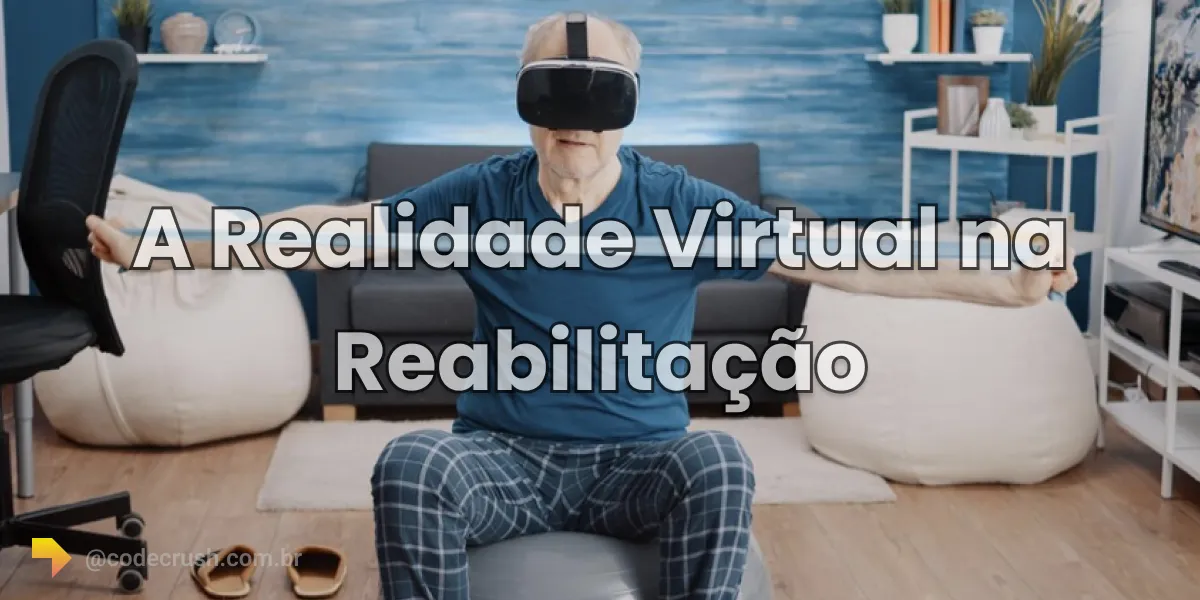
Virtual reality (VR) in rehabilitation is the use of simulated and immersive environments to treat patients in physical therapy, neurological rehabilitation and mental health. The technology raises motivation, stimulates neuroplasticity and allows training movements safely with objective progress data.
- What is virtual reality in rehabilitation?
- How does virtual reality accelerate rehabilitation?
- What are the advantages of VR in rehabilitation?
- What do studies say about the efficacy of VR?
- Where can VR be applied in rehabilitation?
What is virtual reality in rehabilitation?
Virtual reality in rehabilitation combines glasses, gloves and motion sensors to place the patient inside a three-dimensional digital environment, where they perform therapeutic exercises. Therapists use this immersion to personalize tasks, measure performance in real time and adapt the difficulty to each clinical evolution.
VR creates a sense of presence: the brain reacts to the virtual scenario almost as it would react to the physical world. This allows building tailored personalized virtual environments — a simulated physical therapy room, an urban course to train gait or a calm scenario for breathing exercises.
Unlike augmented reality, which overlays digital elements onto the real world, VR completely replaces the environment with a synthetic scenario. This full immersion isolates distractions and concentrates the patient's attention on the therapeutic task.
Beyond the stimulus, the platform records every movement with precision. The therapist obtains objective data — range, speed and number of repetitions — that replace subjective assessment and ground clinical decisions. This combination of immersion and telemetry is what distinguishes VR from traditional approaches.
How does virtual reality accelerate rehabilitation?
Virtual reality accelerates rehabilitation by turning repetitive and monotonous exercises into engaging tasks with immediate feedback. The patient sees their progress, receives visual rewards and maintains adherence to treatment — three factors that conventional therapy has difficulty sustaining over weeks.
Immersion also increases the number of repetitions without the patient perceiving the effort as fatigue. Since neuroplasticity depends on intense and repeated practice, this gain in training volume tends to translate into more consistent motor recovery.
Another mechanism is multisensory feedback: sound, image and haptic response confirm each success. This real-time return helps the brain recalibrate the movement and fix new motor patterns faster than isolated verbal instructions.
Finally, VR allows the challenge to be graduated continuously. The therapist adjusts speed, range and complexity at each session, keeping the patient in the ideal zone between boredom and frustration — the point at which motor learning is most efficient.
What are the advantages of VR in rehabilitation?
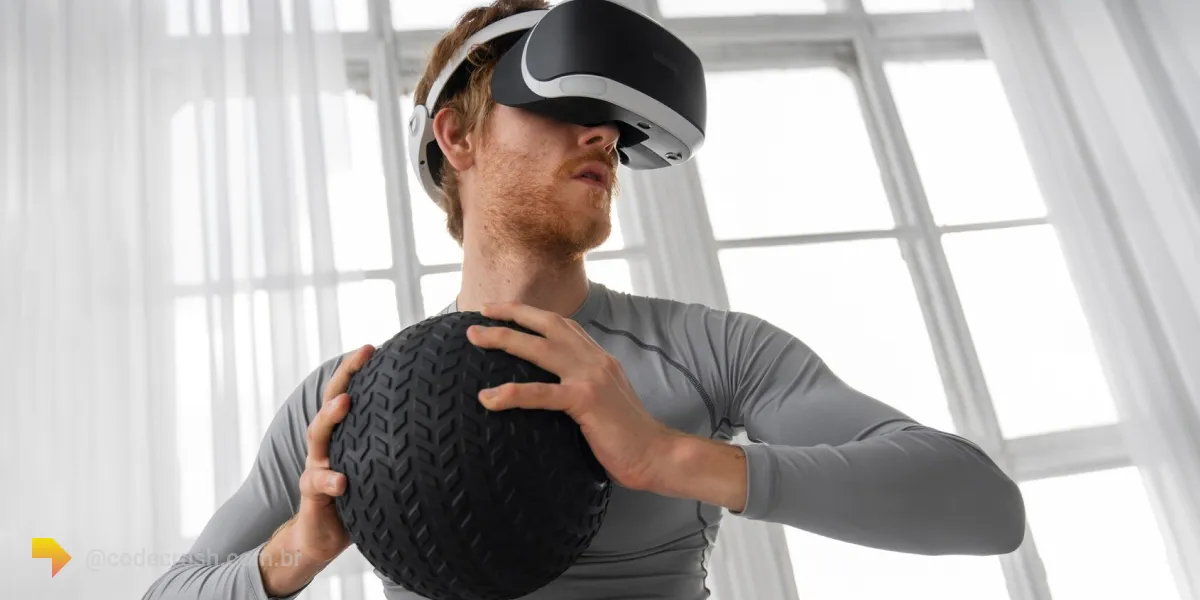
The main advantages of VR in rehabilitation are greater patient motivation, direct stimulation of neuroplasticity and more safety during practice. Combined with data monitoring, these three gains explain why the technology is being incorporated into physical therapy clinics and neurological centers.
Improved motivation and engagement
VR makes the rehabilitation process more interesting by creating immersive and interactive environments. This engaging nature helps maintain the patient's motivation and commitment to treatment, increasing the chances of a successful recovery.
The patient also feels more active and responsible for their own process: they see progress in real time, set personal goals and track performance. This sense of control and achievement has a positive impact on self-esteem and emotional well-being.
Stimulation of neuroplasticity and functional recovery
Neuroplasticity is the brain's ability to adapt and reorganize its neural connections in response to external stimuli. VR offers a variety of virtual stimuli that activate and strengthen the neural pathways linked to motor and cognitive skills.
By creating experiences that challenge the brain, the therapist promotes neuroplasticity and facilitates the recovery of functions lost to injuries or diseases. This capacity is especially important in cases of brain injury, such as stroke (cerebrovascular accident) or traumatic brain injury.
More safety and fewer risks
VR allows simulating safe environments for the practice of motor skills and functional activities, reducing the risk of falls and accidents during sessions. The therapist can practice risky movements without exposing the patient to real danger.
The system also gives precise control over the difficulty level and the intensity of the exercises. This is decisive in musculoskeletal injuries, where excessive movement or overload can delay recovery.
What do studies say about the efficacy of VR?
Studies indicate that VR is effective especially as a complement to conventional therapy, not as a substitute. The 2017 Cochrane review, conducted by Laver and colleagues, gathered 72 clinical trials and 2,470 participants and concluded that VR added to standard treatment improves upper limb function and activities of daily living after a stroke.
The authors themselves caution: in isolation, "virtual reality was not more beneficial than conventional therapy approaches in improving upper limb function". The value, therefore, lies in expanding therapy — not replacing it. The review also classifies much of the evidence as low quality under the GRADE system, a reminder that the field is still maturing.
More recent meta-analyses reinforce the potential of full immersion. A 2024 systematic review with 23 studies and 395 patients found statistically significant improvements on the Fugl-Meyer Assessment and the Box and Block Test with immersive VR, although not always reaching the threshold of clinical relevance.
Much of this scientific output is published in the Journal of NeuroEngineering and Rehabilitation, a reference at the frontier between engineering and therapy. The academic interest follows the market: the global VR rehabilitation segment is expected to grow at an annual rate of close to 24% through 2030, according to sector market research projections.
Where can VR be applied in rehabilitation?
VR has broad application in rehabilitation: it covers everything from musculoskeletal physical therapy to the treatment of neurological and mental health disorders. On each front, the immersion adapts the virtual scenario to the therapeutic objectives and the patient's specific limitations.
Physical therapy and musculoskeletal rehabilitation
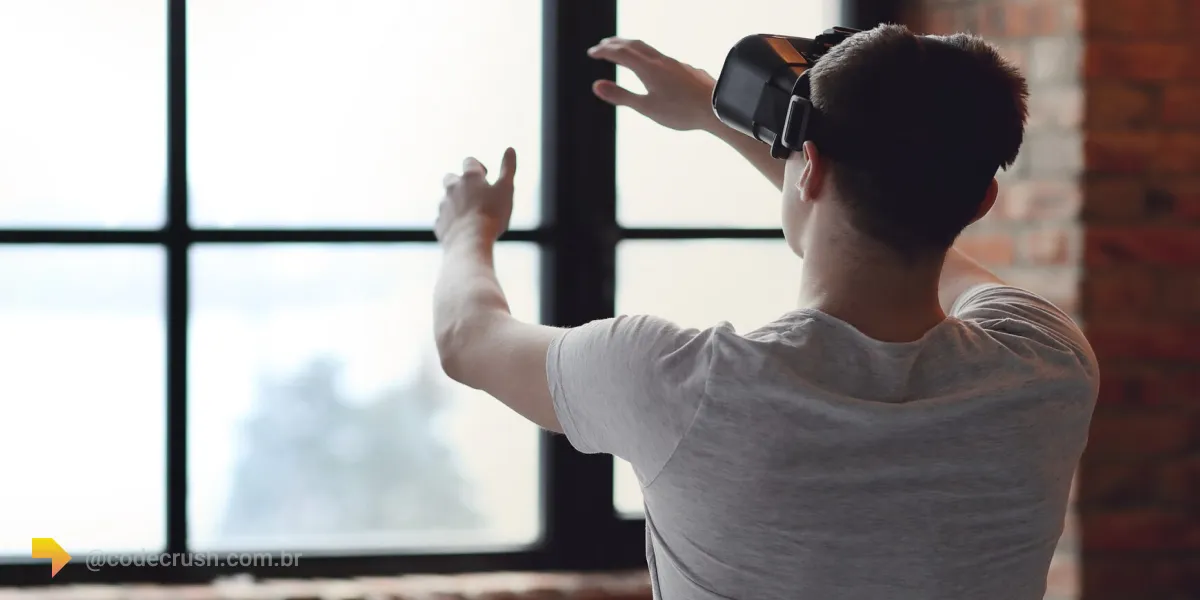
In physical therapy, VR allows therapeutic exercises to be performed in a safe and controlled environment, improving muscle strength, range of motion and coordination. The patient can also simulate everyday activities — walking, climbing stairs or lifting objects — before performing them in the real world, gaining confidence and skill.
Neurological rehabilitation and movement disorders
Neurological rehabilitation finds in VR a non-invasive approach to stimulate the central nervous system in conditions such as stroke, spinal cord injury or multiple sclerosis. The therapist creates scenarios that challenge motor skills and help improve balance, coordination and gait, as well as training everyday tasks tied to the patient's independence.
Psychosomatic disorders and mental health
VR also acts in mental health, creating relaxing or controlled-exposure environments to treat anxiety, stress and phobias. A patient afraid of flying, for example, can face a gradual flight simulation. Used as a biofeedback tool, the platform also helps the patient monitor physiological responses and develop self-regulation — a convergence of health and technology that connects to the advance of artificial intelligence in medicine and the future of predictive care with AI.
Conclusion
Virtual reality is not a distant promise in rehabilitation: it is an already effective tool when used judiciously, as a complement to therapy conducted by professionals. The strongest evidence — from the Cochrane review to recent meta-analyses — points to the same place: VR shines by increasing motivation, training volume and safety, not by replacing the therapist. For clinics and developers, the message from CodeCrush is clear: the differentiator will be less in the headset and more in the software that personalizes tasks and turns movement data into better clinical decisions.
Recommended for this topic
Picked by the editors — only what we would use.
Bookcenter RJ
Kit Upgrade INTEL I5 4570 + Placa Intel H81 + Memória 8 GB+ Cooler
A Casa dos Importados
Hub Usb 2.0 c/7 Portas Pen Drive Teclado 480mbps Hd
MultGo Oficial
Hub USB 3.0 Tipo C Adaptador 4 em 1 Premium Alta Velocidade de Transmissão
## faq
Frequently asked questions
What is virtual reality in rehabilitation for?
It serves to place the patient in simulated environments where they perform therapeutic exercises with immediate feedback. It is used in physical therapy, neurological rehabilitation and mental health to increase motivation, stimulate neuroplasticity and measure progress with objective movement data.
Is virtual reality effective in stroke rehabilitation?
Yes, especially as a complement. The 2017 Cochrane review, with 72 trials and 2,470 participants, concluded that VR added to standard therapy improves upper limb function and activities of daily living after a stroke. In isolation, it does not outperform conventional therapy.
Does virtual reality replace traditional physical therapy?
No. The evidence indicates that VR works best as a complement, expanding training volume and adherence, not as a substitute for the physical therapist. The professional continues to define objectives, adjust difficulty and interpret the data generated by the sessions.
What equipment is used in VR for rehabilitation?
The main ones are VR glasses or headsets, gloves and controllers with haptic response, as well as motion sensors and cameras that track the body. Some systems add balance platforms and integration with telemedicine for remote monitoring of sessions.
Topics in this article
## continue lendo
Artigos relacionados



Keep browsing
Previous article

How to enter the metaverse: step by step and platforms
To enter the metaverse, create an account on platforms like Roblox or Decentraland and access it from a phone, PC, or VR headset.
Read moreNext article

Artificial Intelligence in Medicine: Benefits and Risks
AI in medicine accelerates diagnoses and personalizes treatments: the FDA has already authorized more than 1,250 AI-enabled devices. See benefits and risks.
Read moreAbout the author